
Contents
A Can of Diesel and a Diesel Car
My father still had a spare fuel can.
There were a few liters of diesel in it.
Since I am now the only one in the family with a diesel vehicle, the next step seemed appropriately challenging:
Take fuel can. Pour diesel into car.
Except it didn’t work. Wait – what?
Instead of going into the tank, the diesel ran back out around the vent area of the filler neck.
Some of it, naturally, also ran over the car.
I tried different positions for the fuel-can spout: slower, faster, farther in, not as far in.
The result remained more or less the same.
The diesel apparently did not want to go into the diesel tank.
There Is More Than Just a Flap
After taking a closer look, I first noticed the metal flap that is already visible inside the filler opening.
Presumably, the fuel nozzle normally pushes it open.
But there are also two small tabs at the sides.
And they looked suspiciously as if they might also have something to do with releasing that flap.
So I looked up what the whole thing was actually for.
The answer:
Misfueling prevention device.
Until then, I had genuinely never been consciously aware of such a thing.
Maybe it is common knowledge.
In that case, it was simply common knowledge that had passed me by.
Why the Fuel-Can Spout Does Not Work
The reasoning behind it actually makes sense.
A gasoline pump nozzle is narrower than a diesel pump nozzle.
At roughly 21 millimeters in outside diameter, a gasoline nozzle can in principle fit into the larger filler opening of a diesel vehicle.
That is apparently exactly why my vehicle has this additional lockout.
Only a nozzle with the larger diesel diameter presses the two side releases and allows the flap to open.
The spout on my spare fuel can was too small to do that.
Which raised another question:
Why do I actually have a gasoline-style fuel can for diesel?
I had given that approximately as much thought as I had given the possibility of a misfueling prevention device.
None.
Better Not to Discover This After Breaking Down
In the garage, the whole thing was mainly annoying.
A few liters of diesel were sitting there and simply could not be poured into the car without some extra help.
The same discovery would be rather less amusing after breaking down somewhere.
Walk three kilometers to the nearest gas station, buy a fuel can and some diesel, walk back to the car—and then discover that the spout you just bought cannot release the filler flap at all.
That would be a rather inconvenient time to learn something new about your own car.
So I wanted a small solution that could simply stay with the onboard tools.
A Small Adapter Made from POM-C
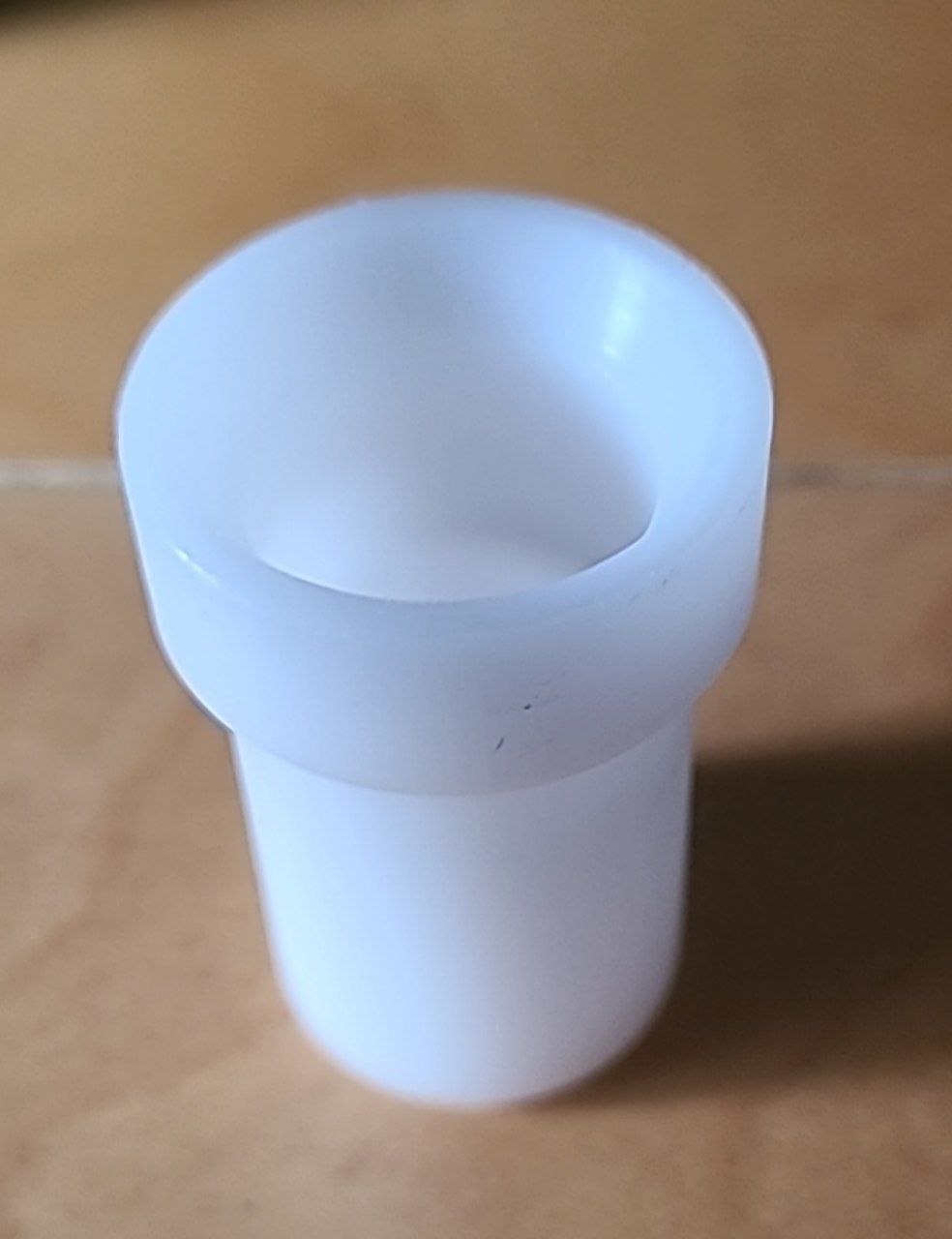
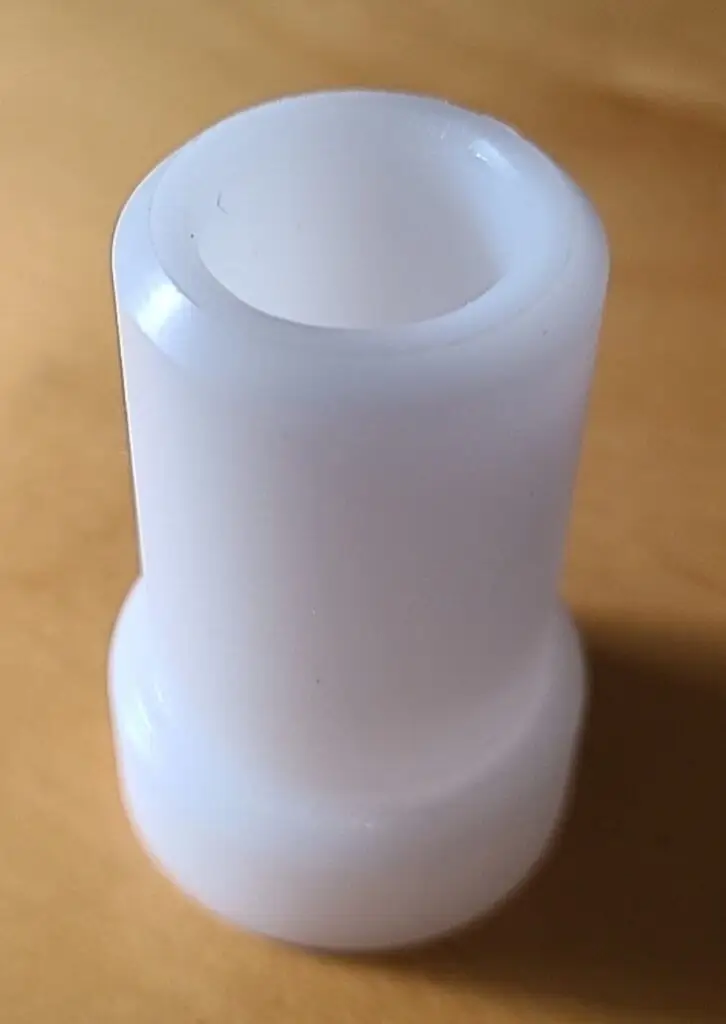
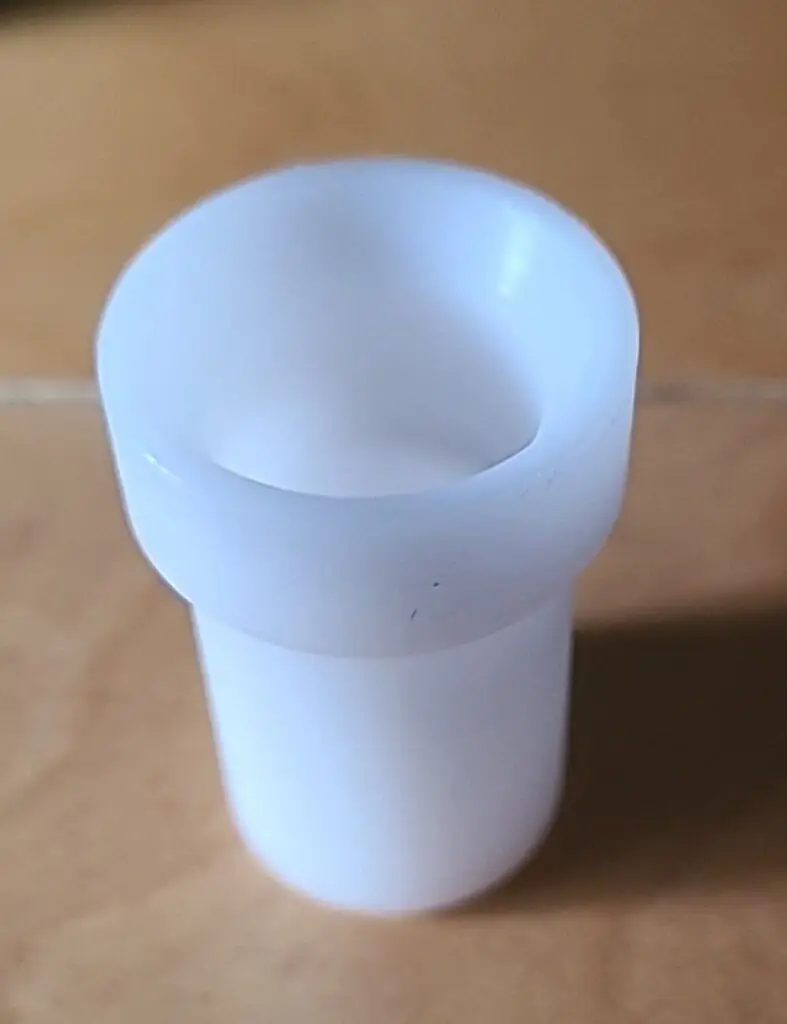
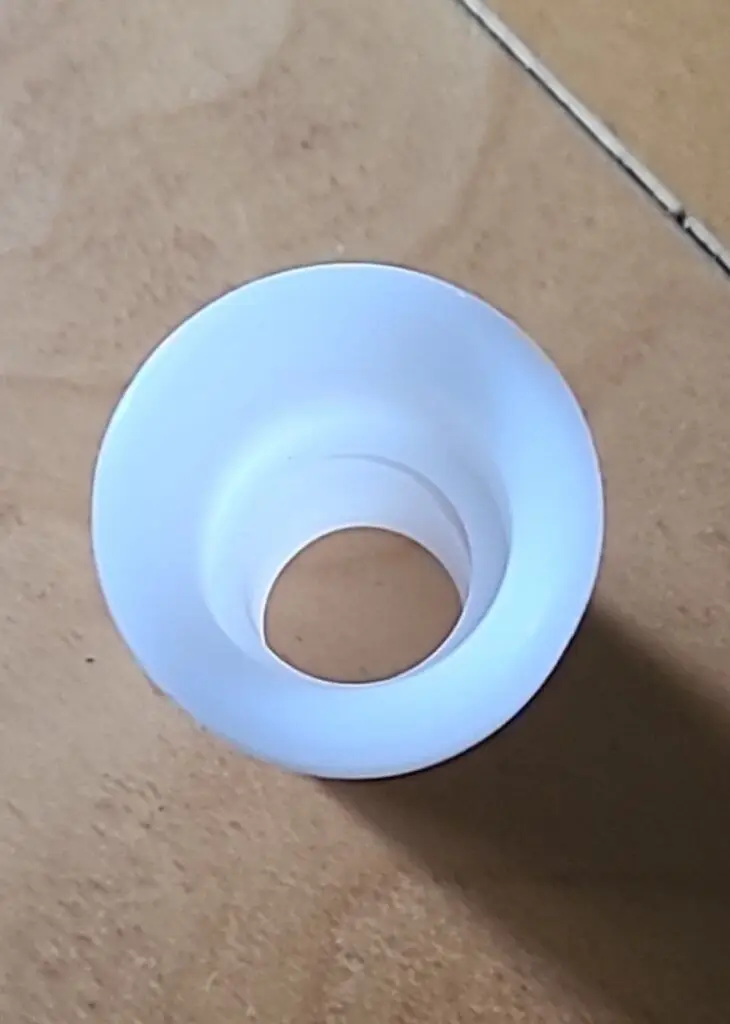
I made the adapter from POM-C.
The material machines very nicely, is sufficiently durable, and is suitable for contact with diesel fuel.
The basic geometry was quickly decided:
- 25 millimeters outside diameter on the vehicle side
- 21 millimeters inside diameter for the narrower fuel-can spout
- a small lead-in taper for the hose or spout from the fuel can
- an internal taper acting as a small funnel
- and a substantial flange on the outside
The outside diameter takes the place of the larger diesel pump nozzle and operates the release mechanism for the filler flap.
The fuel-can spout is inserted through or into the adapter.
The flange has an at least equally important job:
It prevents the adapter from disappearing completely into the fuel tank someday.
There are parts where an elegant shape matters more.
Here, I cared more about the flange.
Quickly Turned with the ELS
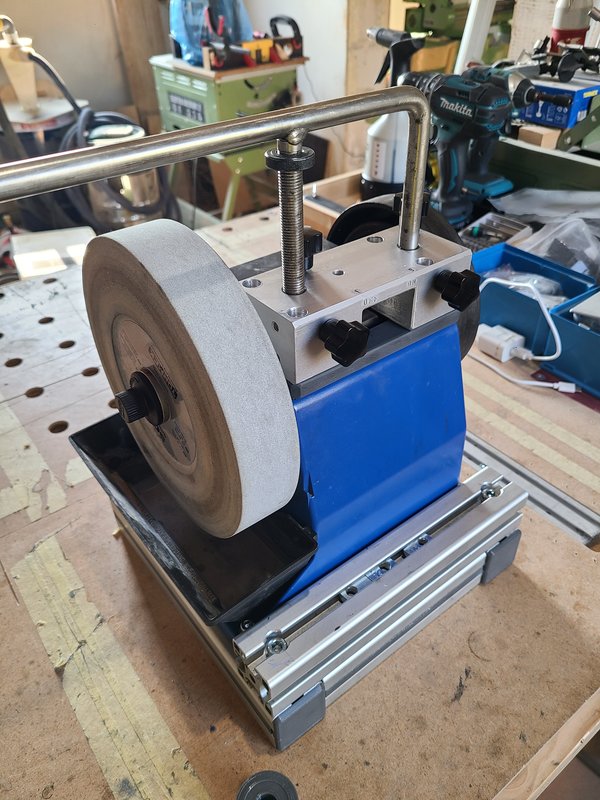
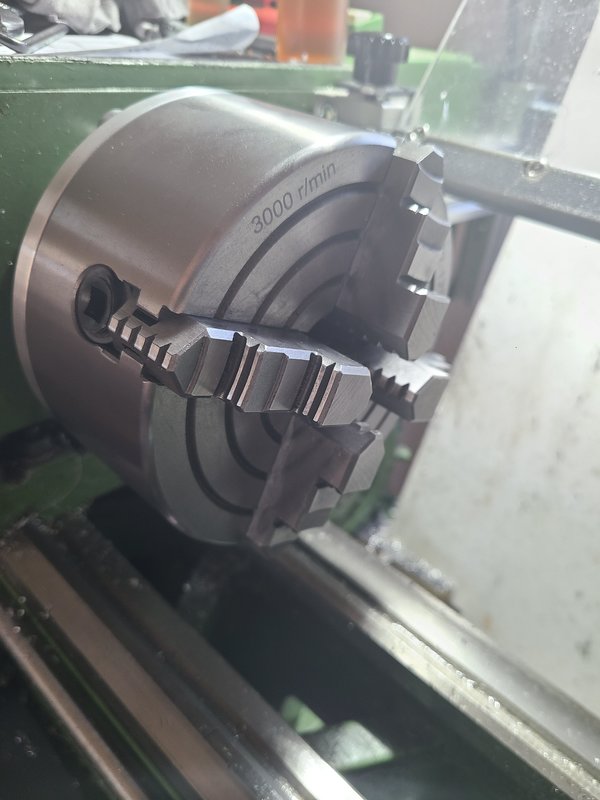
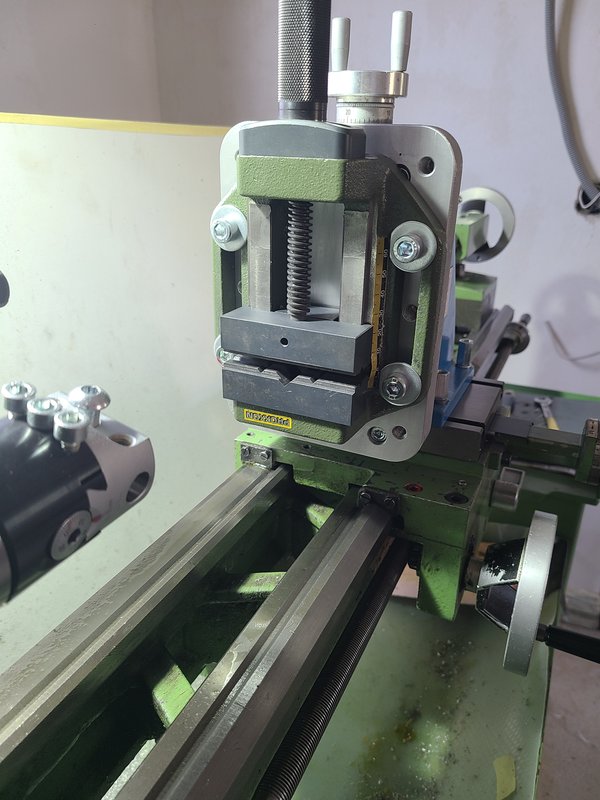
I made the small sleeve on the Emco using the ELS.
For a part like this, it is actually a rather pleasant little turning job: outside diameter, bore or inside diameter, two small tapers, and a flange.
Not a major project.
But one of those parts where half an hour in the workshop might someday save several kilometers of walking and a considerably worse mood.
Into the Onboard Tool Kit
The adapter is going into the car now.
Together with the rest of the onboard tools.
Ideally, I will never need it again.
That would probably be the best indication that it has found exactly the right place.
Looking Back
All I really wanted to do was pour a few liters of diesel from a fuel can into a diesel tank.
Instead, I ended up with:
- diesel on the car
- the discovery of a misfueling prevention device I had never known about
- the realization that not every fuel-can spout will work with it
- and a small turned part made from POM-C
The misfueling prevention device is doing exactly what it is supposed to do.
As a side effect, it also prevents me from pouring my own diesel from my own fuel can into my own diesel tank without the correct intermediate piece.
Now I know.
And from now on, the appropriate answer to that problem will be somewhere in the glove compartment or onboard tool kit.
The adapter shown here was made specifically for my fuel can and the filler opening on my vehicle. Dimensions and misfueling prevention systems may differ on other vehicles. When handling fuel, the instructions provided by the vehicle and fuel-can manufacturers should be followed.
Did You Know About This Lockout?
Until this little incident, I had never given a misfueling prevention device any thought.
Have you ever run into the same problem when refueling from a spare fuel can – or do you already keep a suitable adapter in the vehicle?
I am especially interested in experiences with different vehicles and fuel-can systems. Suggestions for simpler solutions that I may simply have overlooked are also very welcome.
Leave a Reply